






































































































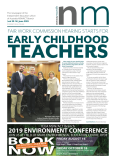
























A new study finds a strong link between better workforce conditions and high-quality early childhood education.
A unionised workplace is also more likely to have an enterprise agreement (EA) with above-award conditions such as non-contact time for documentation and higher rates of pay.
Ongoing safety breaches and substandard training show the value of universal access to early childhood education and care will not be achieved unless service quality is prioritised.
This requires a skilled, stable and well-resourced workforce.
Working conditions
Early childhood thinktank The Front Project set out to investigate the link between high-quality services and staffing conditions in The Hidden Lever: How pay and conditions support child outcomes in low SES early childhood education and care services.
“We were particularly interested in how educator working conditions relate to service quality, especially in communities where children stand to benefit most,” said The Front Project’s strategic policy manager Martel Menz.
Menz said the report identifies a “clear gap” in public policy dialogue.
“Conditions like planning and assessment time, professional development and paid leave are often invisible to policymakers, even though they are fundamental to both workforce wellbeing and educational outcomes,” she said.
Where early learning matters
Menz looked at more than 350 services in the most socioeconomically disadvantaged areas in Australia, known as Socio-Economic Indexes for Areas (SEIFA) 1 communities.
“These settings are where quality early learning matters most, and where it’s often hardest to achieve,” she said.
“All of these services are also rated Exceeding or Excellent under the National Quality Standard (NQS).”
A sample of 45 enterprise and multi-employer agreements were examined for entitlements such as non-contact time, professional development, leave provisions and allowances specific to regional and remote areas.
“This allowed us to compare high-quality services’ conditions to those relying on the awards and to understand how better conditions show up in children’s experiences,” Menz said.
Data from the Australian Bureau of Statistics shows 62 per cent of staff in the sector are covered by an award, 30 per cent are employed under EAs and 8 per cent have individual arrangements.
However, Menz’s study found 66 per cent of staff in the highest-quality SEIFA 1 services were covered by EAs.
“These services provide better working conditions, and the benefits flow directly to children through more stable, supported and effective educators,” she said.
Children thrive when educators supported
Menz said better conditions give teachers and staff the time, stability and professional support to deliver high-quality early learning in the following ways:
- Adequate planning time enables reflective practice, curriculum development and intentional teaching tailored to children’s needs.
- Access to professional development and mentoring ensures staff can stay current with evidence-based approaches and continually improve their practice.
- Secure employment, fair wages and adequate leave entitlements allow educators to be present, avoid burnout, and build strong, lasting relationships with children and families.
Menz said the study confirms what teachers and staff have long known: services that invest in workplace conditions are the same ones achieving the highest NQS quality ratings.
Other factors such as respect for the profession and a culture of collaboration are also vital to attracting and retaining high-quality staff.
In a submission to the NSW Upper House inquiry into the sector, the IEU notes better pay and conditions are key to improving the quality of early childhood education and solving the staffing crisis.
The IEU has negotiated improved pay and conditions in EAs at services operated by KU, SDN, Uniting and Goodstart.
Menz’s research also offers strong evidence for encouraging not-for-profit providers, particularly in disadvantaged areas.
“Data shows they are more likely to establish services in underserved communities, hire staff under EBAs with stronger workplace conditions, and achieve higher quality ratings,” she said.
Menz said better workplace conditions are not only about the wellbeing of staff, but also children’s safety, which has emerged as a serious issue following revelations of abuse and mistreatment of young children mainly in for-profit services.
“Better conditions won’t fix everything, but when educators are overworked, unsupported, or constantly changing, risks to children increase,” Menz said.
“By contrast, services that support their staff to learn, reflect, and improve are more likely to provide safe, nurturing environments.”